
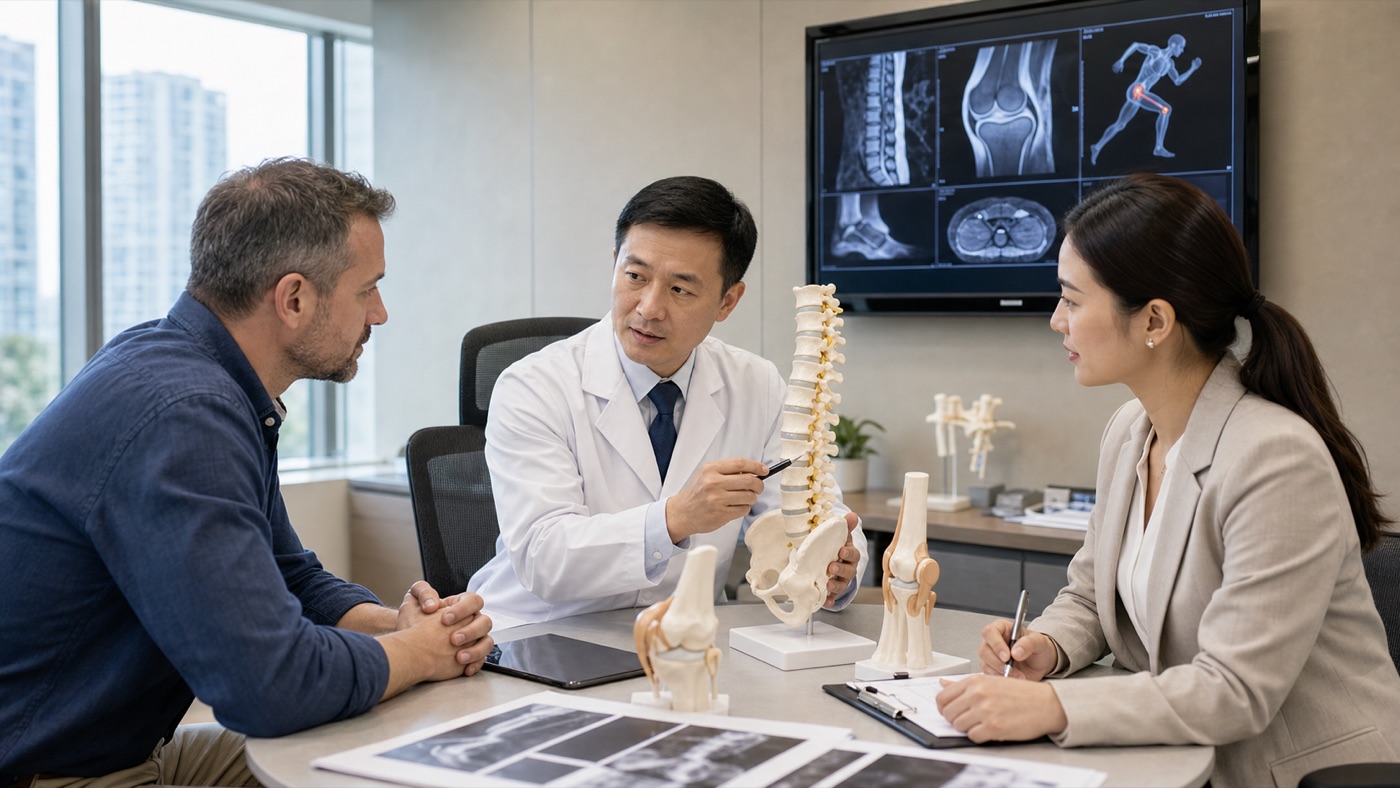
Foreign patients considering orthopedic surgery in China usually have practical questions. Can a Chinese hospital review my MRI or X-rays? Is China suitable for knee replacement, hip replacement, spine surgery, or sports injury treatment? Will I have English support? How long should I stay? What happens after I return home?
China has large hospital systems, experienced orthopedic departments in major cities, and providers that can support selected international patients. But the system can be difficult to navigate from outside the country. A foreign patient may not know which hospital department is appropriate, what records are needed, or how to communicate with the hospital before traveling.
This guide explains how to approach orthopedic care in China carefully.
When Foreign Patients Consider Orthopedic Care in China
China may be considered by patients who:
- Live in China or elsewhere in Asia
- Travel to China frequently for work or family
- Want a second opinion on imaging
- Are comparing knee or hip replacement options
- Need review for spine pain or nerve symptoms
- Have a sports injury and want specialist assessment
- Need rehabilitation or post-operative follow-up while in China
- Want help arranging care in a large Chinese hospital system
The decision should be based on medical suitability, not only cost or convenience.
Knee Replacement in China
Patients with severe knee arthritis may ask about knee replacement in China. Some may be comparing a long waiting list at home with faster access abroad. Others may want a second opinion before deciding on surgery.
Before considering knee replacement, patients should ask:
- Is the arthritis severe enough for surgery?
- Are non-surgical options still reasonable?
- Is partial or total knee replacement being considered?
- What implant system may be used?
- How long is the hospital stay?
- What rehabilitation is required?
- How long should I stay in China after surgery?
- What follow-up will I need after returning home?
Patients should prepare X-rays, MRI if available, previous treatment history, medication list, and notes about walking distance, pain, and daily limitations.
Hip Replacement in China
Hip replacement may be considered for severe arthritis, avascular necrosis, fractures in selected situations, or other hip conditions. The planning should include implant type, surgical approach, medical risk review, rehabilitation, and travel timing.
Foreign patients should ask:
- What diagnosis is causing the hip pain?
- Is surgery clearly indicated?
- What implant will be used?
- What are the expected mobility restrictions after surgery?
- When is flying safe?
- How will blood clot risk be managed?
- What documents will be provided for future doctors?
Hip replacement can improve mobility for suitable patients, but travel planning must be careful because early recovery affects walking, sitting, stairs, and long flights.
Spine Surgery in China
Spine surgery needs careful evaluation. Back pain or neck pain does not automatically mean surgery is needed. Many spine conditions can be managed with medication, rehabilitation, injections, or observation, depending on the diagnosis.
Foreign patients considering spine surgery in China should ask for a detailed imaging review and explanation.
Important questions include:
- What is the exact diagnosis?
- Which symptoms are caused by the imaging findings?
- Are there signs of nerve compression?
- What non-surgical options exist?
- What procedure is recommended and why?
- What are the risks?
- What symptoms may not improve after surgery?
- How long is recovery?
- What follow-up imaging or care is needed?
Spine cases should not be rushed. Patients should prepare MRI or CT images, reports, neurological symptoms, medication history, and previous treatment details.
Sports Injury Treatment in China
Sports injuries can involve the knee, shoulder, ankle, elbow, or tendons. Patients may ask about ACL tears, meniscus injuries, rotator cuff tears, shoulder instability, or cartilage problems.
For sports injury cases, the key questions are:
- Is surgery needed or is rehabilitation appropriate?
- What is the expected recovery timeline?
- What level of activity does the patient want to return to?
- What imaging confirms the diagnosis?
- What rehabilitation protocol will be followed?
- Who will supervise follow-up after the patient leaves China?
Athletes and active patients should be careful about choosing a plan based only on fast scheduling. Long-term function depends heavily on rehabilitation.
Public Hospitals, Private Hospitals, and International Clinics
Foreign patients exploring orthopedic care in China may encounter different provider types.
Large public hospitals may have experienced orthopedic departments and high case volume. They may be strong options for complex cases, but the process can be busy and less familiar to foreign patients.
Private hospitals may offer smoother communication and more patient-centered scheduling. They may be suitable for selected orthopedic consultations or procedures, depending on the case and hospital capabilities.
International clinics may be useful for initial assessment, imaging referrals, rehabilitation, or follow-up, but major surgery may require hospital-level facilities.
The right pathway may involve more than one provider. For example, a patient may have imaging reviewed by a specialist, surgery in a hospital, and rehabilitation with a separate physical therapy provider.
Records Needed Before Contacting Hospitals
For orthopedic surgery in China, records are essential.
Prepare:
- X-ray, MRI, or CT images
- Imaging reports
- Diagnosis notes
- Previous surgery records
- Medication list
- Allergy history
- Blood test or medical clearance documents, if available
- Physical therapy records
- Notes about pain, walking, numbness, weakness, or mobility limits
If records are in another language, a bilingual summary can help. Chinese hospitals may need a clear explanation of the case before confirming the right department or appointment.
Cost and Payment Questions
Orthopedic costs in China can vary by hospital, city, implant, procedure, and length of stay. Patients should ask for a written estimate where possible.
Ask whether the estimate includes:
- Consultation
- Imaging and tests
- Surgeon and anesthesia fees
- Operating room
- Hospital stay
- Implant or device
- Medication
- Rehabilitation
- Follow-up visits
- Translation or patient support
For knee replacement China or hip replacement China searches, implant cost and rehabilitation planning are especially important. For spine surgery China searches, the patient should ask what devices, implants, or imaging follow-up may be needed.
Follow-Up After Leaving China
Follow-up planning should begin before surgery.
Patients should ask:
- How long must I remain in China after surgery?
- When can I safely fly?
- What warning signs should I watch for?
- What medications will I need?
- What rehabilitation plan should I follow?
- Can I receive records in English?
- Who can answer questions after I return home?
A discharge summary, operation note, implant details, imaging, prescriptions, and rehabilitation plan should be organized before leaving the country.
How a China-Based Patient Support Team Helps
A local international patient support team can help foreign patients navigate orthopedic care in China.
Support may include:
- Reviewing records and identifying missing documents
- Preparing a bilingual orthopedic case summary
- Matching the case with appropriate hospitals or departments
- Communicating with hospital staff
- Arranging appointments
- Clarifying cost estimates and expected stay
- Helping with translation during the visit
- Organizing discharge documents and follow-up records
- Supporting insurance claim document preparation
This is especially useful for patients who do not speak Chinese or who need help choosing between public hospitals, private hospitals, and specialist providers.
A Practical Starting Point
If you are considering orthopedic surgery in China, start by organizing your imaging and records. Do not book travel before a hospital or specialist has reviewed enough information.
The first questions should be: What is the diagnosis? Is surgery necessary? Which procedure is recommended? How long is recovery? What follow-up will I need?
Our international patient support team can help foreign patients prepare orthopedic records, contact suitable providers in China, and understand the care pathway before making a travel decision.
Medical note: This article is for general planning information only and does not replace advice from a licensed orthopedic specialist.
Suggested internal links:
- Orthopedic Surgery Abroad
- Medical Treatment in China
- How a Medical Concierge Helps Patients Arrange Treatment Abroad
- Medical Records and Insurance Claims for Overseas Treatment
Sources and further reading:
- CDC Travelers' Health, Medical Tourism: https://wwwnc.cdc.gov/travel/page/medical-tourism
- U.S. Department of State, Your Health Abroad: https://travel.state.gov/content/travel/en/international-travel/before-you-go/your-health-abroad.html